
 Community discussion
Rough idle after intake work
Check intake connections and vacuum-related components before replacing parts.
Tell NextOBD what your car is doing. Add symptoms, recent work, and whatever evidence you have. A structured path for what to check next.
In development. Join the early beta.
Your symptoms, readings and useful sources. One diagnostic path.
Community discussionCheck intake connections and vacuum-related components before replacing parts.
 Video guide
18:42
3 days ago
B48 2.0L Turbo / 87,420 mi
System Too Lean - Bank 1
2017 BMW 330i xDrive / B48 2.0L Turbo
Inspection / Tools
Torque specifications / Safety
Concept preview. Not connected.
Check-engine light / Low RPM
Rough idle + low-RPM hesitation
Check-engine light after recent intake service.
Prewritten demo. No live diagnosis or source retrieval.
The engine computer is detecting a lean air-fuel condition. Several systems can cause this, so the goal is to test the most likely areas before replacing components.
Check intake boots, clamps, hoses, and connections for leaks or anything disturbed during recent service.
Compare short-term and long-term fuel trims at idle and elevated RPM.
Verify airflow readings are reasonable for engine speed and load.
Look for unmetered-air sources and crankcase ventilation faults.
Evaluate fuel pressure/delivery after intake and airflow issues have been ruled out.
An ordered set of checks. No component failure is confirmed.
The engine computer is adding fuel now.
The added-fuel correction has persisted over time.
Rough idle, P0171 and recent intake work make unmetered air worth checking early.
These readings do not prove a vacuum leak. Additional testing is needed. Compare airflow and trims across operating conditions.
Next: inspect intake connectionsIllustrative sources, not live results
Rough idle after intake workCommunity discussion
Check intake connections and vacuum-related components before replacing parts.
This example connects the timing of the symptoms with the recent intake service. It illustrates a useful inspection question, not a verified answer or a confirmed failed part.
Sample discussion, not an actual Reddit post.
B48 rough-idle diagnostic walkthroughVideo guide outline / 18:42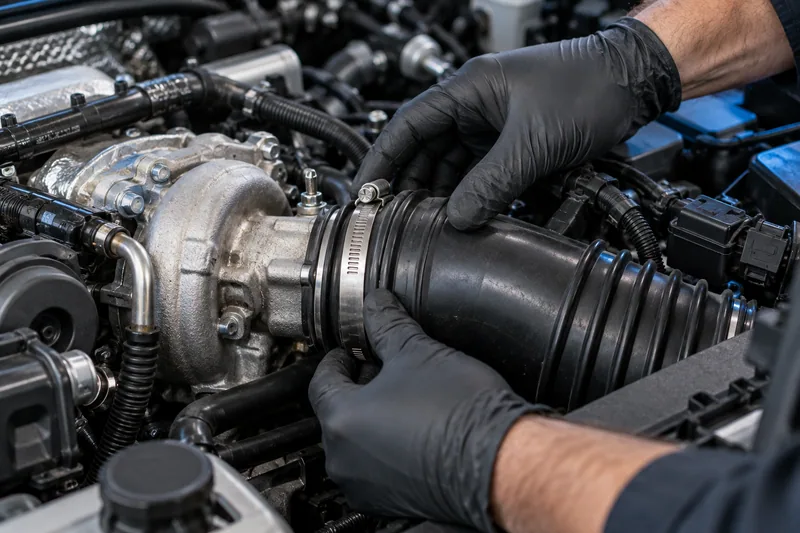
Illustrative guide outline, not a playable video. The thumbnail was created for NextOBD; no creator, channel or live YouTube video is represented.
Relevant areas: intake connections, vacuum path and component inspection. A future licensed source could provide inspection procedures, required tools, torque specifications and safety notes when available.
Original NextOBD concept, not an OEM document or verified procedure. No licensed database, BMW or MOTOR connection is active. No manufacturer endorsement is implied.
Illustrative outlines. Verify the fault before repair.
If the diagnostic path points to the recently serviced intake, an inspection guide could help verify the area before any repair.
Illustrative outline, not a verified repair procedure. Consult vehicle-specific service information.
When readings need context, compare trim behavior across operating conditions before drawing a conclusion.
Illustrative outline, not a verified repair procedure. Consult vehicle-specific service information.
If earlier checks support leak testing, use vehicle-specific service information to select the appropriate test. Repair guidance follows only once the fault is verified.
Illustrative outline, not a verified repair procedure. Consult vehicle-specific service information.
Example references, not replacement recommendations.
Useful for checking the intake / vacuum system for unmetered-air leaks.
Fitment unverified. No live inventory, pricing or purchasing.
A fitment-reference example, only if inspection identifies a damaged or leaking connection.
Fitment unverified. No live inventory, pricing or purchasing.
Only investigate replacement after airflow readings and related checks support it.
Fitment unverified. No live inventory, pricing or purchasing.
MAF. Vacuum leak. Fuel pump. O2 sensor. Injector.
"Consider consulting a mechanic."
Rough idle + hesitation. Recent intake work. P0171.
STFT +18% / LTFT +12%
Next: inspect recently disturbed intake connections for unmetered air. Verify the fault before repair.
Your vehicle, symptoms and recent work.
Add codes and readings when you have them.
Follow the evidence before choosing a repair.
Join the early beta.
We'll let you know when NextOBD is ready for you to try.